Swans are the Central Park relatives of ducks and geese. They are the Montessori cousins. The Diana to Fergie. The Kate to Megan. The ones that grew up drinking freshly squeezed juice, when we were gulping Oros. They had little cartons of chocolate milk in their lunch boxes, and cellophane packets of carrot sticks and cucumber roundels and those cute little mini corn-on-a- mini-cob. And Petit Pois. Unlike the ordinary cousins, they did not have sticky lips from peanut butter sandwiches and water drunk from the palm of your hand from the playground tap. Swans have class, They have style. They are born graceful. They have entire symphonies and ballets dedicated to them.
Ducks quack and waddle. No one will ever admire a duck for its grace. In fact, the only admiration ducks are granted, is for getting their ducks in a row. Sometimes they don’t even manage that. At a push, they are lucky to get all their ducks in the same pond. They are used to describe unshaven disheveled losers; you know the ones that resemble a dying duck. They are also often mistaken for people that find an easy way out, when they duck out of something. If a duck is fortunate enough to leave a legacy, it will be as take out Peking Duck in a paper box or Duck la Orange, served by a waitron with a skinny moustache. Or on a really bad day: Foie Gras. What a way to go.
Geese eat slugs and snails. They are said to make excellent guard “dogs” precisely because they are so noisy. Sometimes, you get lucky, and you are hatched as an Egyptian Goose. On a really good day, you can even become fair game on a Royal hunt. Now, many years ago, that gave you some status, I mean imagine being hunted by Henry VIII, or Oliver Cromwell. Somehow, being chased by one of the current bunch, just does not have the same status. Boris Johnson on horseback must be quite a scary sight. And goose eggs. Everyone likes to get their hands on goose eggs.
Swans conjure up images of ballerinas, old violins, and genuine leather hand luggage, for trips to places like Vienna, Strasburg, and Prague. Those places you can only dream about, when you have a long, white graceful neck and you are admired for no other reason than for just being what you were born to be. A Swan. There are six living species of swans. Swans mate for life. A group on land is called a bevy, but when in flight they become a wedge. They can live for as long as 24 years, and only start breeding from between 4 to 7 years of age. Occasionally divorce does occur. Yup, even for swans. Unlike ducks and geese (those useless, good for nothing drunkards!) the born handsome male keeps the nest and will help to incubate eggs. They protect their nests aggressively. Swans have found their way onto coins. They are found on the Polish Coat of Arms, they feature in mythology. The phrase: Swan Song is attributed to such mythology, as it is believed that upon death, the mute swan will sing beautifully. The mute swan being one of the sacred birds of Apollo, who is often depicted riding a chariot pulled by swans. Apollo was the god of archery, music and dance, and many other things. He has quite an impressive CV. Bet you he had all his ducks in a row.
Swan Lake is among the most canonic of classical ballets, choreographed to the music of Tchaikovsky. The dance of the Little Swans must be my absolute favourite. I can sit through an entire Swan Lake, just to see the little swans trying their best to be like the big girls. Clumsily graceful. Tchaikovsky was in good company. Camille Saint-Saens, in his Carnival of the Animals, composed that ever so charming “The Swan.” Our oldest son, who is a cellist used to play it so beautifully. That is, when he practiced. On a poor practice day, it did sound like “The Dying Duck.” Other composers had a go at swans. There was Jean Sibelius and Carl Orff. Sadly, Carl Orff is best known for Carmina Burana, which to most people is the Old Spice advert song. Had Carl been a bird, it certainly would have been a waddling duck. Imagine leaving a legacy of cheap after shave and a catchy tune.
Now for the second part of the title: Privilege.
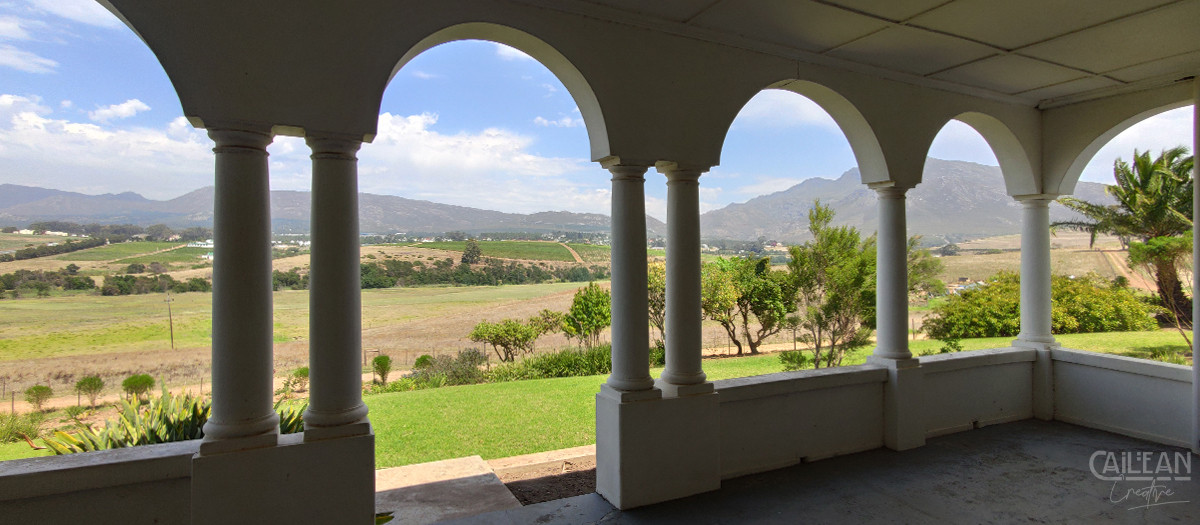
Privilege would indicate an advantage or opportunity that most other people do not have. Still, now, after more than a year of coming down to the Western Cape, hoping to make our Meraki Mountain happen, we still get it from people. We get told: Oh, you are quite living the life. Or: you know that what you are doing has always been my dream. Then we also get: you are so lucky. How privileged you are. Sometimes the comment is said from a good place. Sometimes it is said so flippantly. But what I can tell you is this: Colin and I had to give up our stable and predictable life. We had to leave behind our settled home and circle of friends. We had to leave behind our secured income and pension funds. We had to take the leap, step into the unknown, with nothing but a wing and a prayer. And what have we achieved so far; you ask?
We are indeed living a fairy tale. The one of the ugly duckling, which will in time become a swan. So far, the only thing we have in common with a swan is our swimming style. Next time you see a swan gracefully gliding by, stick your head under water, and take a good look at his feet. Yes. They paddle away frantically. That is Colin and I. Yes. We are quite living the life. We are living out your dream. We are so privileged to be able to see our dream take shape. But look beneath the surface, and you will also see how frantically we are paddling away to stay above water! But you know what? It is worth it.
Well said love it!
Soon enough all that paddling will be worth it.
Op die einde: Sal jul weet die doel heil die middele vriendin.